
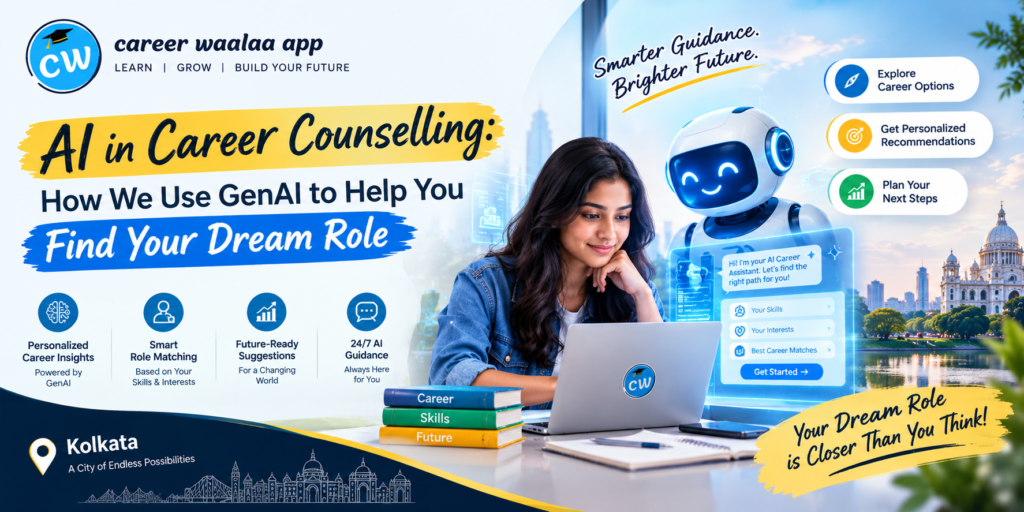
Choosing a career is no longer simply about selecting a degree after Class 12 or following the most popular career path among your friends. Students today are entering a job market influenced by artificial intelligence, changing skill requirements and new career opportunities.
That is where AI in career counselling can make a meaningful difference.
At Career Waalaa, GenAI can be used as a support layer in the counselling process to organize information, explore career possibilities, identify skill gaps and create more personalized career discussions. However, AI should not make the final decision for a student. The goal is to combine technology with human judgement, counselling and a clear understanding of the student’s interests, strengths and goals.
What Is AI in Career Counselling?
AI in career counselling means using artificial intelligence and data-driven tools to support different stages of career planning.
Traditional counselling depends heavily on conversations, assessments and the counsellor’s professional experience. AI can add another layer by processing large amounts of career and skills information much faster.
For example, AI can help connect:
| Student Information | AI-Assisted Insight |
| Interests | Potential career areas |
| Skills | Suitable role categories |
| Academic background | Relevant education pathways |
| Career goals | Possible career routes |
| Skill gaps | Recommended areas for development |
| Personality preferences | Work environments worth exploring |
The important point is that these recommendations are starting points, not final career decisions.
How We Use GenAI in Career Counselling
GenAI can be particularly useful when a student has too many options but does not know where to begin.
1. Understanding Your Career Profile
A student’s career profile can include interests, academic subjects, strengths, preferred activities, skills and long-term goals.
GenAI can help organize this information into a clearer picture, making it easier for the counsellor and student to identify patterns.
For example, a student who enjoys technology, problem-solving and creative work may have several possible directions rather than just one obvious career.
2. Exploring Multiple Career Options
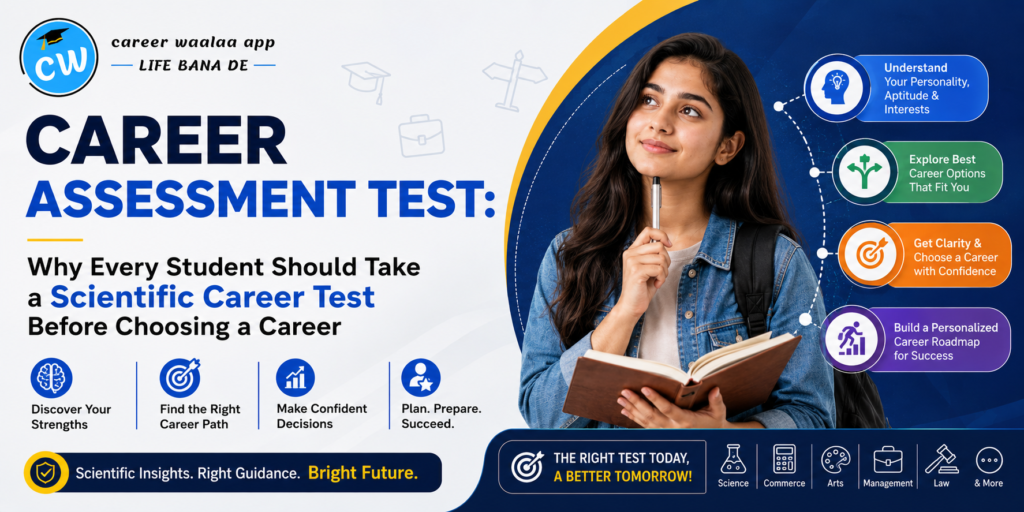
One of the biggest advantages of AI in career counselling is its ability to help students explore alternatives.
Instead of asking, “Which career is best?”, the better question is:
“Which career options fit my current profile, and what would I need to develop for each one?”
A GenAI-assisted process can help compare different paths based on education requirements, skills, work responsibilities and future development.
| Career Direction | Important Skills | Possible Preparation |
| Data & Analytics | Analytical thinking, statistics, technology | Projects + technical learning |
| Digital Marketing | Communication, analytics, creativity | Campaign projects + certifications |
| UX/UI Design | Creativity, research, design tools | Portfolio + design practice |
| Finance | Numerical ability, analysis | Relevant degree + practical exposure |
| Technology | Logical thinking, programming | Coding + projects |
These are examples rather than automatic recommendations. A proper career assessment is still necessary before selecting a path.
3. Identifying Skill Gaps
A degree alone may not tell you whether you are ready for a particular role.
AI can help compare a student’s current skills with the skills commonly associated with a target career.
For example:
Target role: Digital Marketing Specialist
Existing strengths: Communication, writing
Development areas: Analytics, SEO, paid advertising, AI tools
This creates a more practical career roadmap instead of simply recommending a course.
UNESCO’s recent work on AI and education also emphasizes developing AI competencies and critical judgement rather than treating AI as a replacement for human learning and decision-making.
4. Making Career Research Faster
Career research can become overwhelming.
Students may search for:
- Career options after Class 12
- Courses and degrees
- Required skills
- Job roles
- Industry trends
- Alternative career paths
- Future career opportunities
GenAI can help organize these questions into a structured research process.
This is particularly useful because AI is already changing entry-level work and the skills expected from young professionals. The World Economic Forum notes that AI-driven task changes are especially relevant to early-career pathways.
5. Creating a Personalized Career Roadmap
The biggest value of combining AI in career counselling with human counselling is personalization.
Instead of giving every student the same generic advice, the process can be structured around:
Assessment → Exploration → Comparison → Skill Gap → Action Plan → Review
For example:
| Stage | What Happens |
| Assessment | Understand interests, aptitude and preferences |
| Exploration | Identify suitable career possibilities |
| Comparison | Compare education, skills and career requirements |
| Skill Gap | Find areas that need development |
| Action Plan | Create short- and long-term goals |
| Review | Reassess progress and update the roadmap |
This makes career planning more actionable.
Why Human Counselling Still Matters
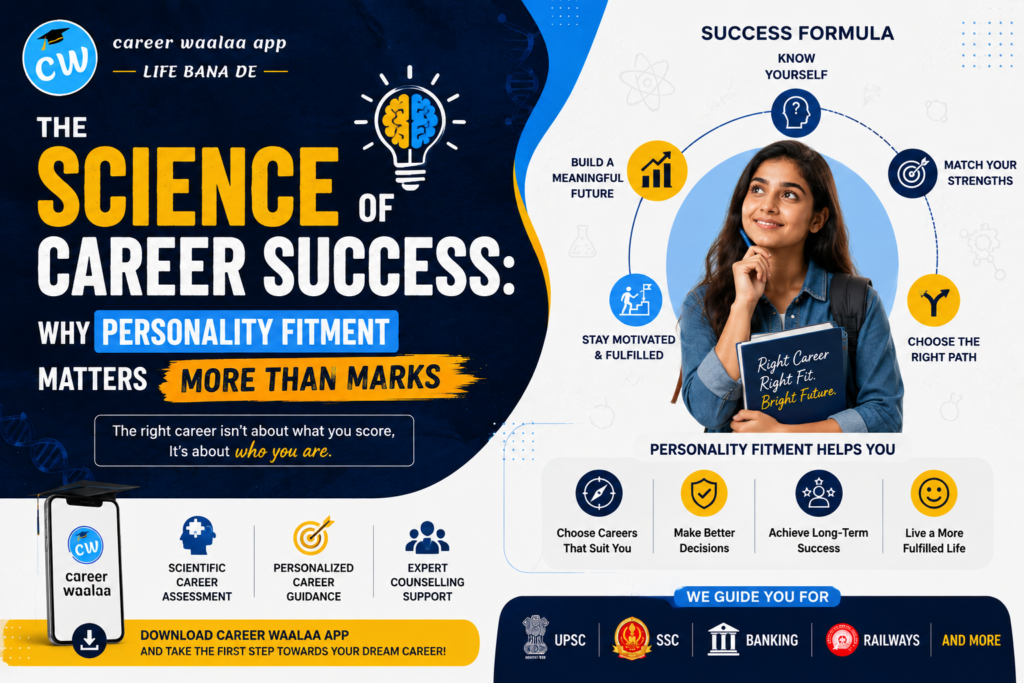
AI can process information quickly, but career decisions involve personal circumstances, motivation, uncertainty and emotions.
A student may have excellent academic performance but little interest in a particular field. Another student may have strong creative abilities but lack confidence.
These situations require conversation and human understanding.
That is why Career Waalaa’s approach should not be AI versus counsellor. It should be AI plus counsellor.
AI can support research and pattern identification, while a counsellor helps interpret those insights in the context of the student’s actual situation.
Can GenAI Tell You Your Dream Role?
Not by itself.
There is no AI prompt that can guarantee the “perfect” career.
Instead, GenAI can help students ask better questions, discover possibilities and understand what different career paths require.
A World Economic Forum example of an AI-powered career coach in Latvia shows how digital profiling can connect students’ interests with career possibilities and current opportunities.
The goal should therefore be better-informed career decisions, not blindly following an AI recommendation.
Safe and Responsible Use of AI
Career information can contain personal and educational details, so responsible AI use matters.
Important principles include:
- Protecting personal information
- Avoiding blind dependence on AI recommendations
- Checking important career information independently
- Using AI to support rather than replace counselling
- Reviewing recommendations for bias or inaccuracies
- Keeping the student’s goals at the centre
UNESCO’s guidance recommends a human-centred approach to GenAI in education, with attention to privacy, safety, human agency and ethical use.
How Career Waalaa Can Help
At Career Waalaa, technology can make career exploration more structured, while professional counselling keeps the process personal.
The objective is not to tell a student, “This is your career.”
Instead, the process should help answer:
What are you good at?
What genuinely interests you?
Which career options match your profile?
What skills do those careers require?
What should you do next?
That combination can turn career confusion into a practical career roadmap.
Final Thoughts
AI in career counselling is changing how students can explore their professional futures. GenAI can make career research faster, organize complex information and support personalized recommendations.
But technology works best when it supports human judgement rather than replacing it.
Your dream role should not be selected by an algorithm alone. It should emerge from a combination of self-awareness, career assessment, practical skills, informed exploration and professional guidance.
In 2026, the smartest approach to career planning is not choosing between humans and AI. It is learning how to use both responsibly.
FAQs
1. What is AI in career counselling?
AI in career counselling refers to using artificial intelligence to support career exploration, skill analysis, career research and personalized career planning.
2. Can AI choose the right career for me?
AI can suggest possibilities, but it cannot guarantee the right career. Human counselling and personal self-assessment remain important.
3. How does GenAI help students?
GenAI can help students explore career options, understand skill requirements, compare pathways and identify areas where additional learning may be useful.
4. Is AI replacing career counsellors?
No. AI can support career counsellors by organizing information and generating insights, while counsellors provide human judgement and context.
5. Can AI identify my skill gaps?
AI can help compare your existing abilities with the skills associated with a target role, but the assessment should be reviewed and interpreted appropriately.
6. Is AI career guidance suitable after Class 10 or Class 12?
Yes, AI-assisted exploration can help students understand different possibilities after school, provided recommendations are considered alongside proper career assessment and counselling.
7. What is the biggest benefit of GenAI in career planning?
One major benefit is the ability to organize large amounts of career information and turn broad questions into more structured exploration.
8. Should I completely depend on AI for career decisions?
No. AI should be treated as a support tool. Important career decisions should consider your interests, abilities, goals, circumstances and guidance from qualified professionals.